Real Time Architecture
AI-powered design for robotic construction
All3's AI-powered design platform generates fully integrated, error-free digital building models, including individual component-level specifications. Architectural layouts are created in minutes, structural models in hours - with technical resolution equivalent to final planning stage achieved at the project outset. Every element is automatically optimised for compliance, fabrication efficiency and Mantis assembly.
Key features
- Automated architecture generation: AI agents generate massing, layouts and circulation patterns in real time - producing multiple viable architectural schemes in minutes.
- Component-level structural optimisation: Mathematically optimal dimensions maximise net usable area whilst maintaining ceiling heights and regulatory compliance.
- Concurrent engineering: Architecture, structure and MEP developed simultaneously within a single digital environment - eliminating coordination delays and errors.
- Production-ready output: Building models translate directly into bills of materials and robotic production programmes without manual re-interpretation.
“Most construction innovations fail because they're introduced into systems not built for them. We didn't just build a robot - we built the design platform required to generate precise instructions for robotic fabrication and Mantis assembly.”

Rodion Shishkov,
Co-founder and CEO All3
How Real Time Architecture works
Site data & constraints
RTA processes B-Plan regulations, building codes, height limits, access conditions, and surrounding context - combining them with All3's manufacturing requirements into a three-dimensional constraint model. Project objectives including usable area targets, cost assumptions, and performance requirements are defined at this stage. This replaces weeks of manual research with instant, comprehensive site intelligence.
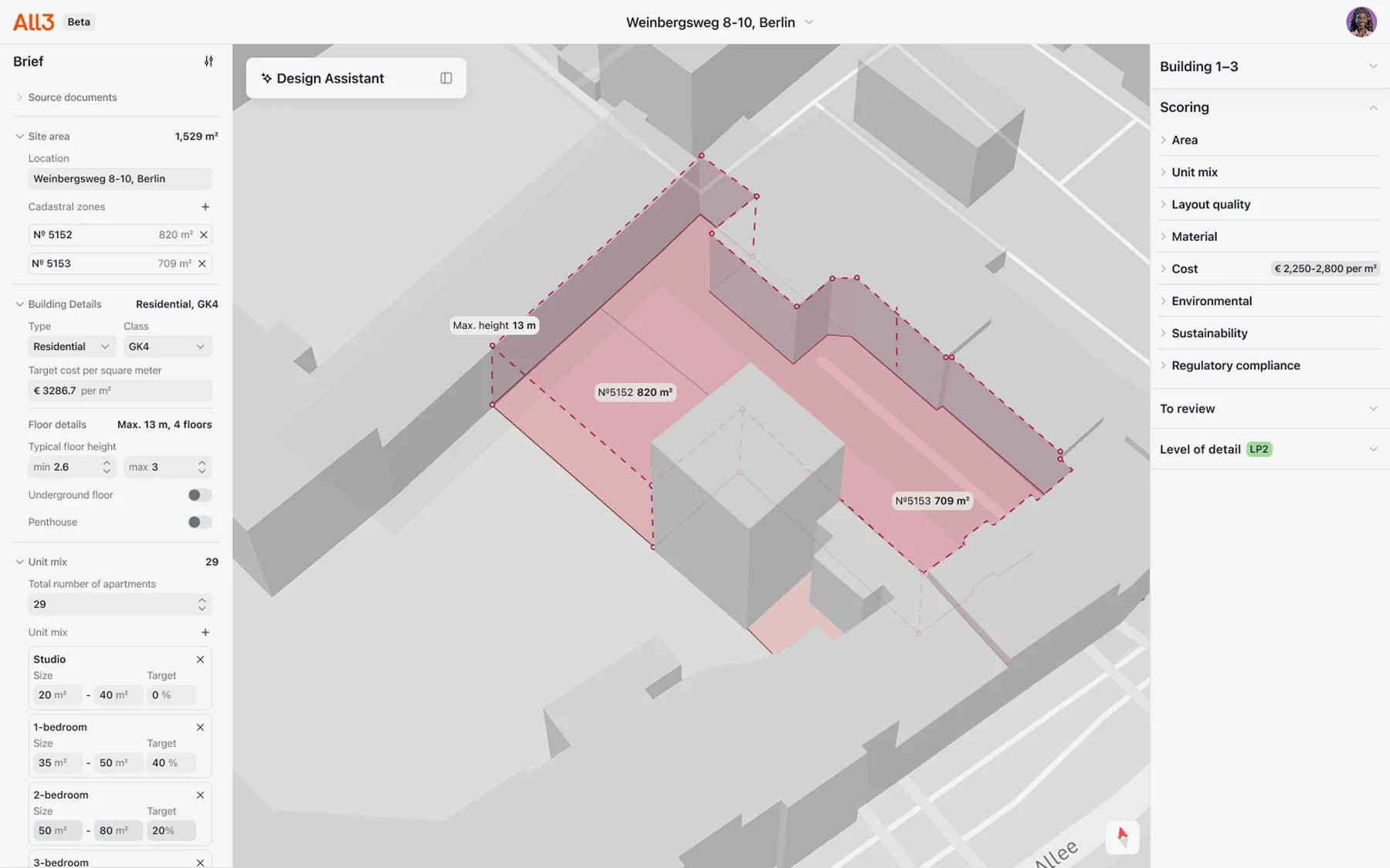
Automated architecture generation
RTA generates architectural concepts in real time using AI agents that autonomously develop massing, layouts, and circulation patterns. Multiple viable architectural options are produced in minutes - each immediately ready for technical development. Schemes can be created from scratch or existing DWG models imported for optimisation. Every option is then scored across developer metrics (usable area, cost), end-user quality (spatial comfort, daylight), and regulatory compliance (DIN standards, building codes).
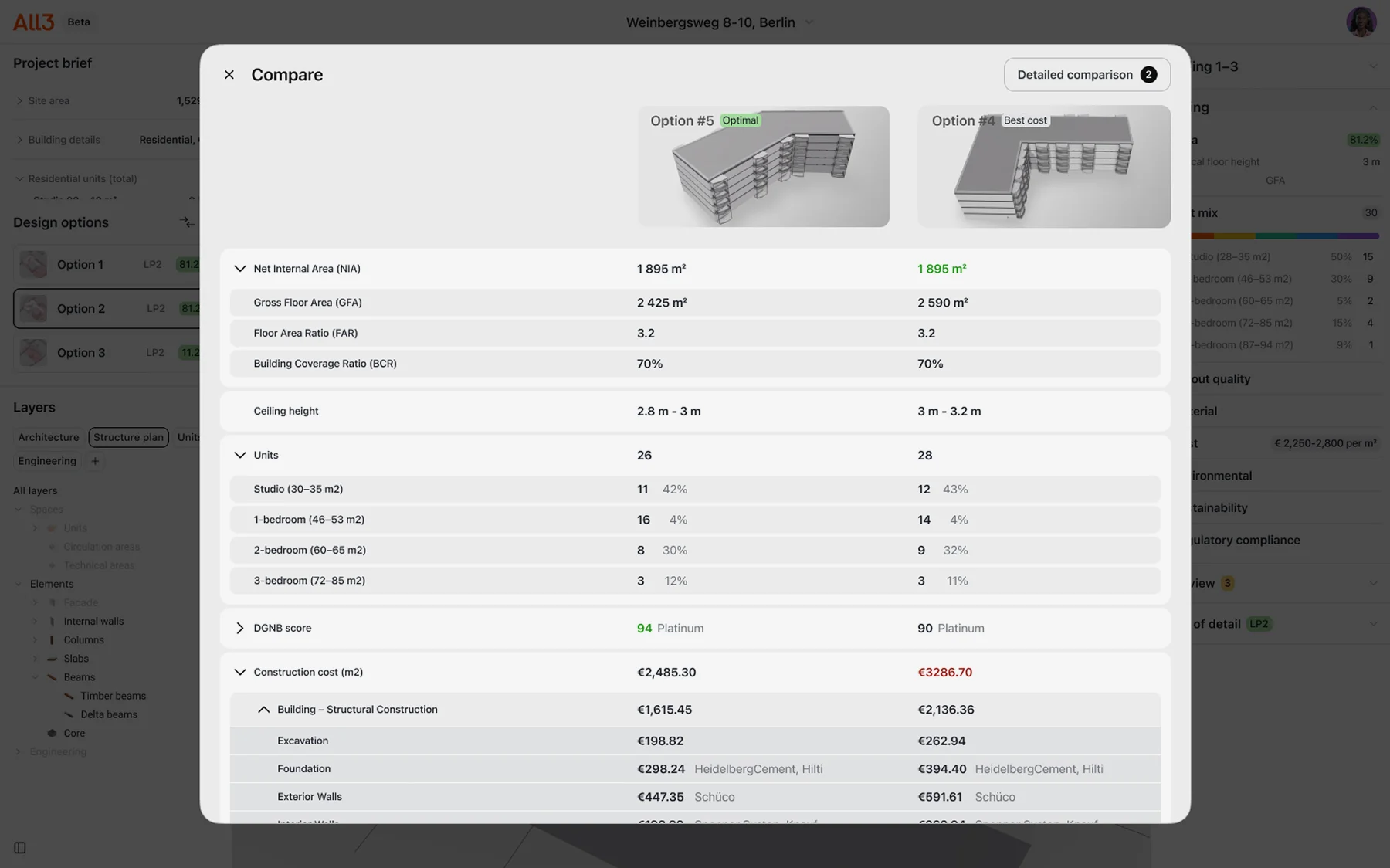
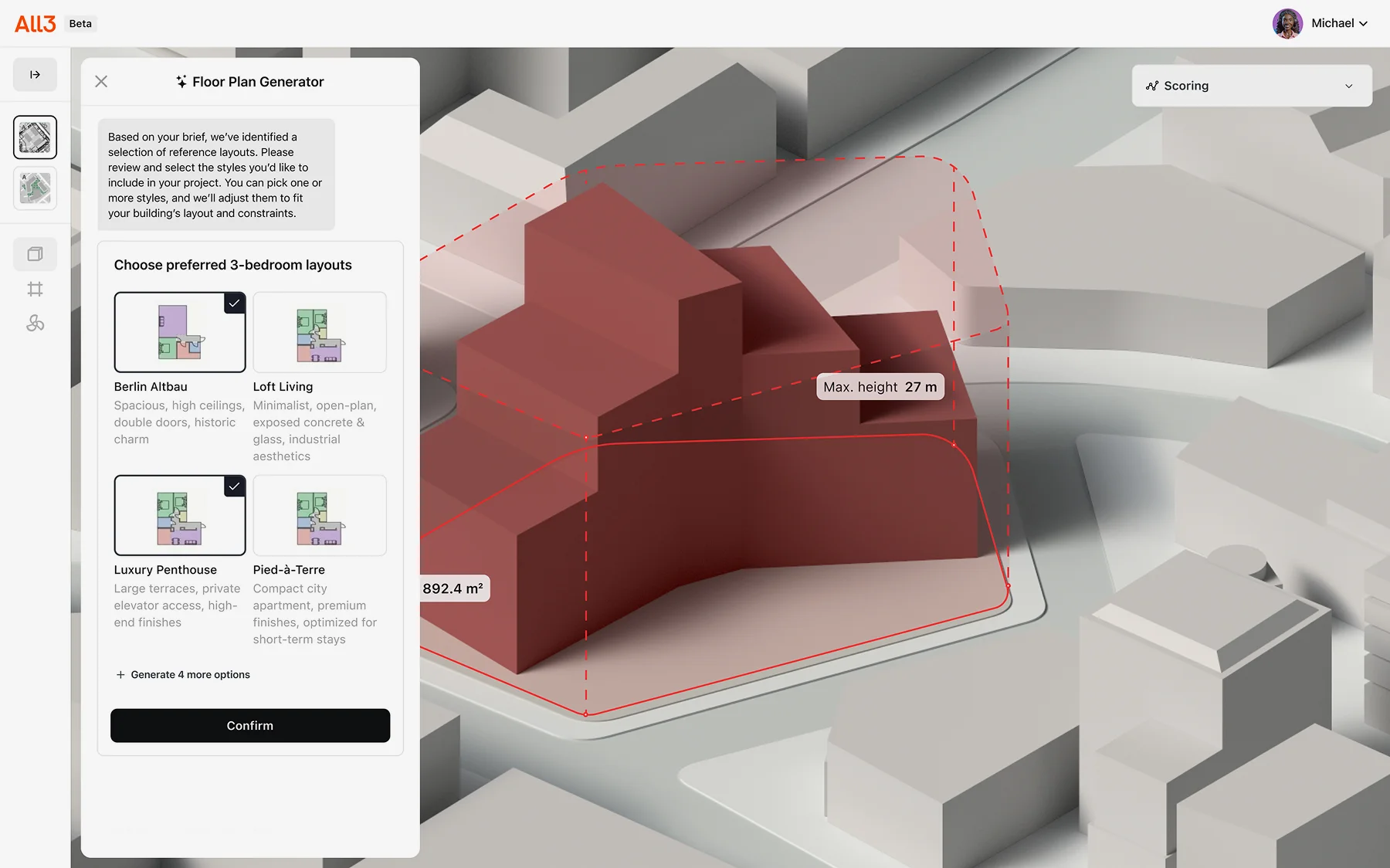
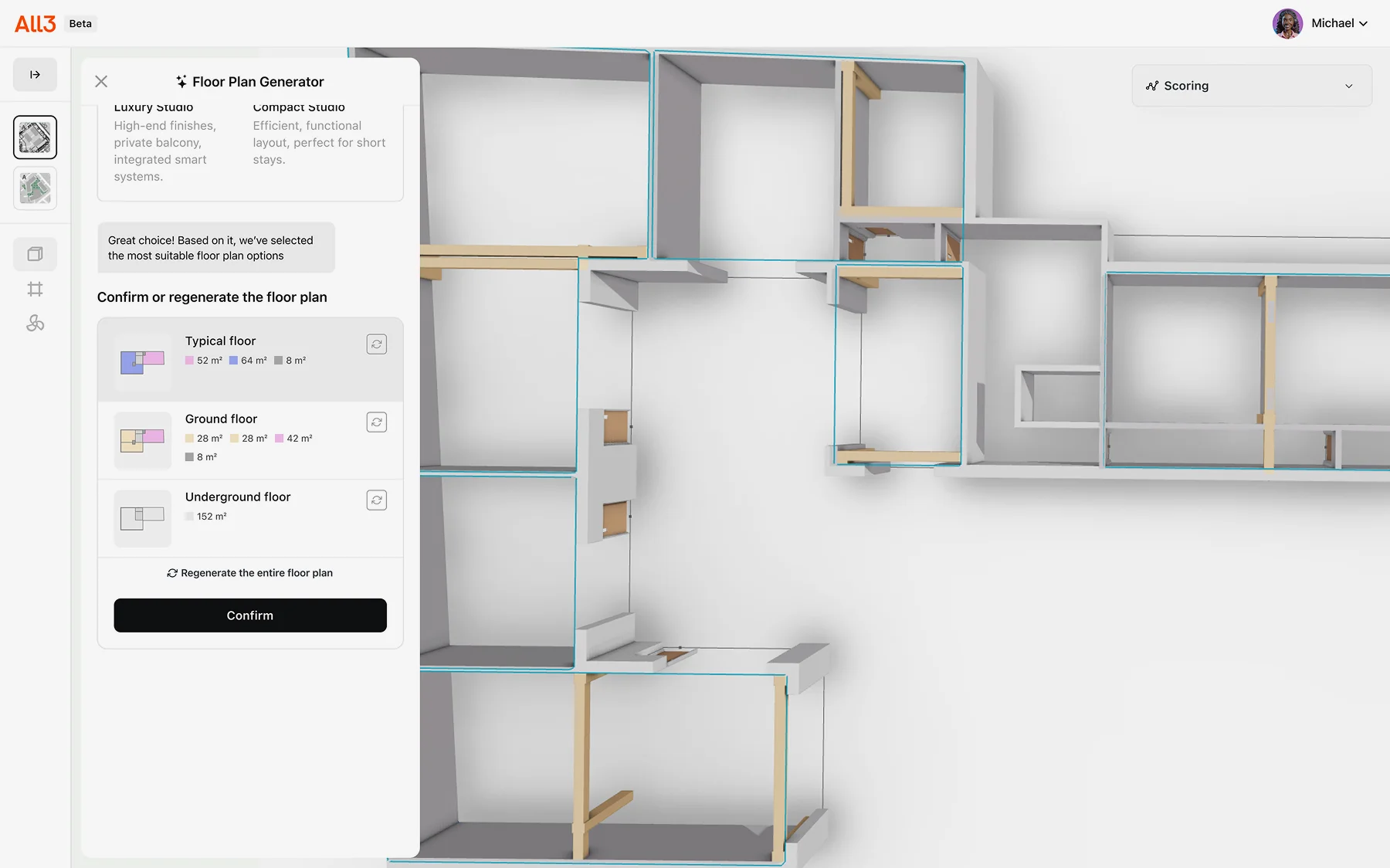
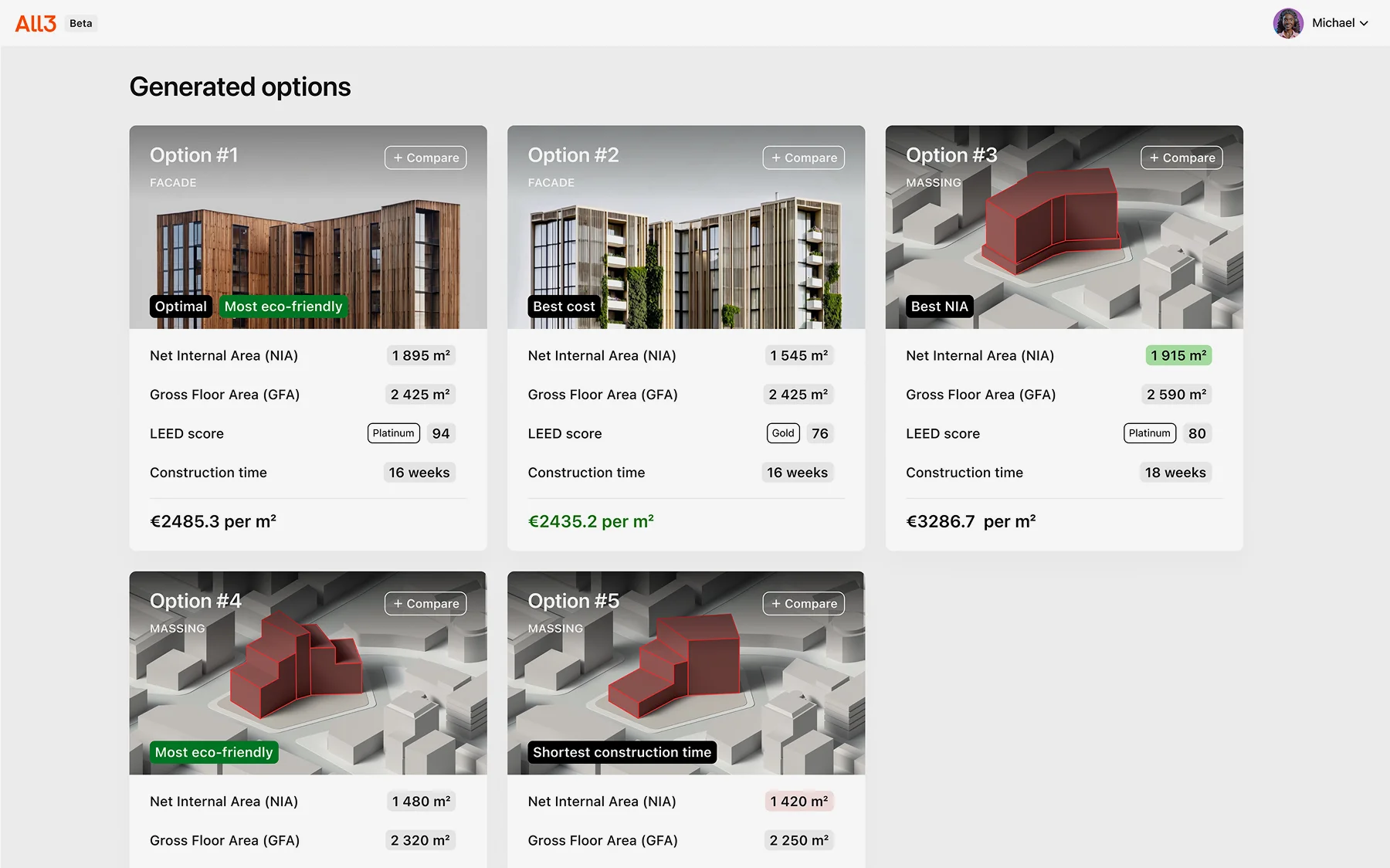
AI agents autonomously develop multiple architectural options in minutes
AI agents autonomously develop multiple architectural options in minutes
Floor plans can be reconfigured instantly based on user requirements
Multiple options are created and scored
Design options are scored across developer metrics, end-user quality and regulatory compliance
Structural model generation
Once an architectural option is selected, RTA generates the structural model at an individual component level. Dimensions and material allocations are defined using genetic algorithms and parametric optimisation. Fire safety, acoustic, and thermal performance are verified automatically. The output is a coordinated model including structural elements, MEP interfaces, schedules, and specifications - completed in approximately nine hours versus months using conventional workflows.
Digital twin & production handover
Architecture, structure, and MEP are then combined into a single digital building model serving as the data source for regulatory submissions, bills of materials, robotic production programmes, and on-site installation instructions. Once approved, the model translates automatically into production data without manual re-interpretation - enabling concurrent planning, permitting, and procurement activities.
Benefits of RTA-powered design
- Faster project initiation: Architectural layouts in minutes, structural models in hours. Coordinated BIM models completed in nine hours versus nine months
- Higher spatial efficiency: Component-level optimisation maximises usable area whilst maintaining ceiling heights and regulatory compliance
- Guaranteed buildability: Every element designed for robotic fabrication and Mantis assembly, eliminating coordination errors and costly redesign cycles
- Unlimited architectural diversity: Automated compliance verification and structural optimisation deliver fully custom designs at the economics of standardisation
Read more about All3 integrated technology
Mantis
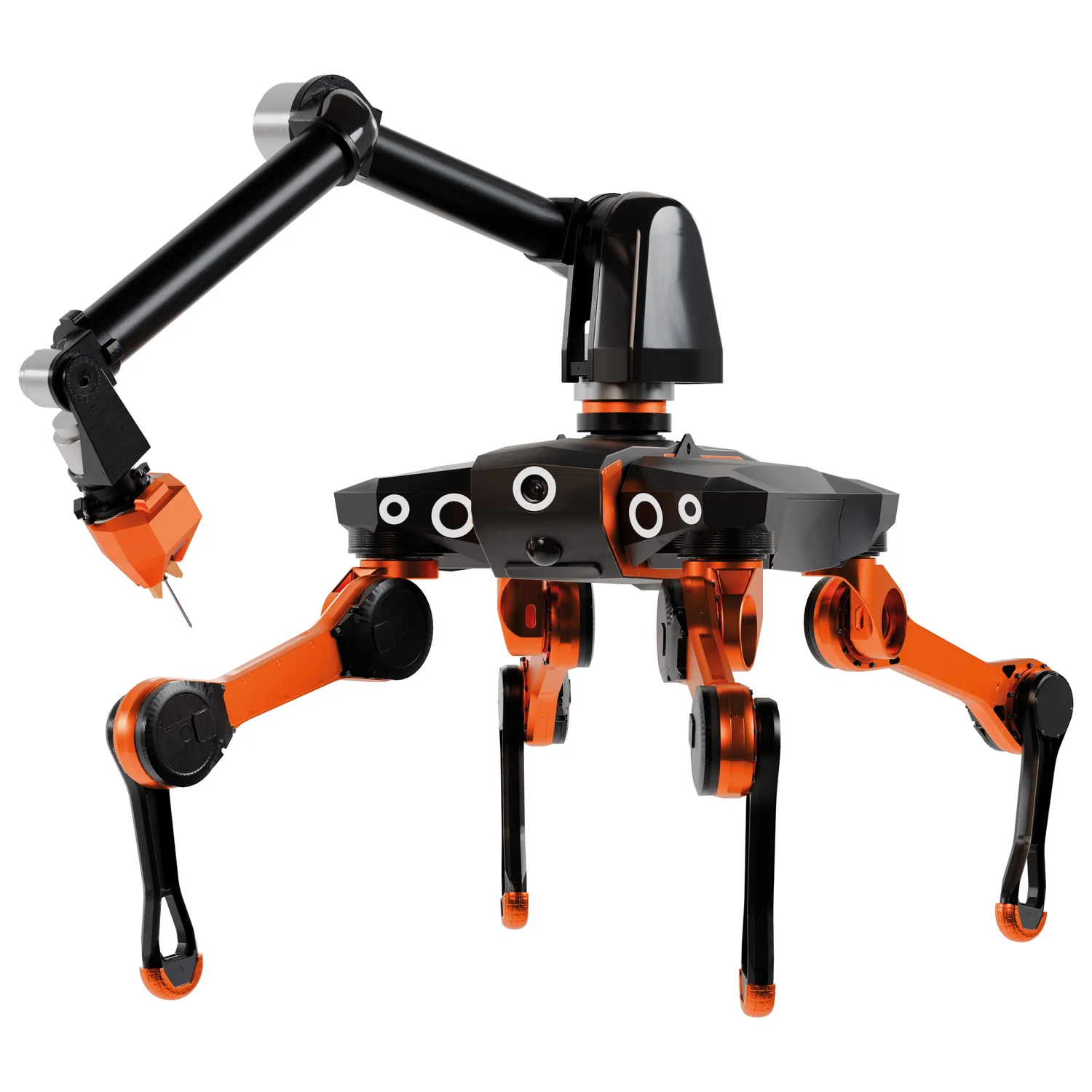
Autonomous construction robot that assembles buildings using custom components with plug-and-play precision.
Explore Mantis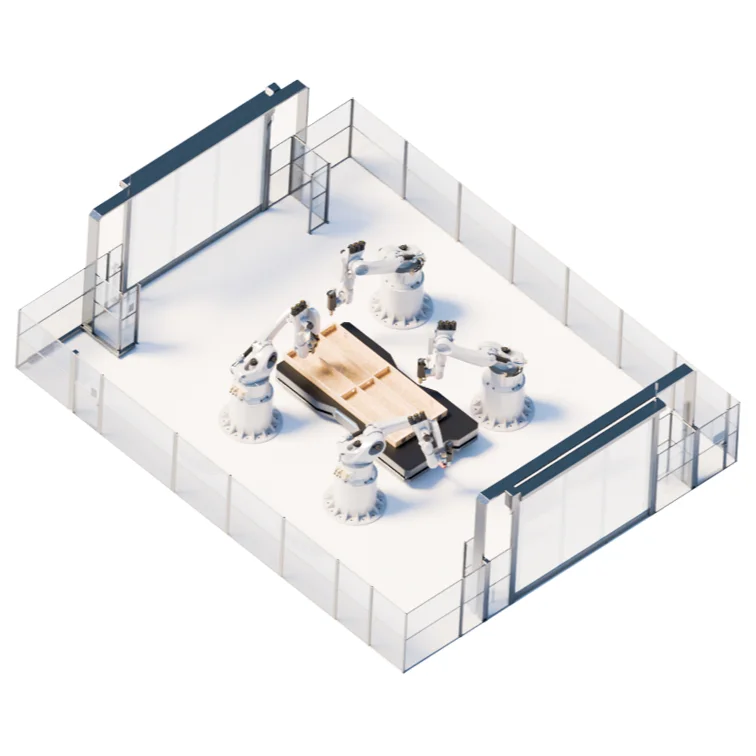
Cellular factory
90% automated robotic production of custom components engineered specifically for Mantis installation.
Explore cellular factory